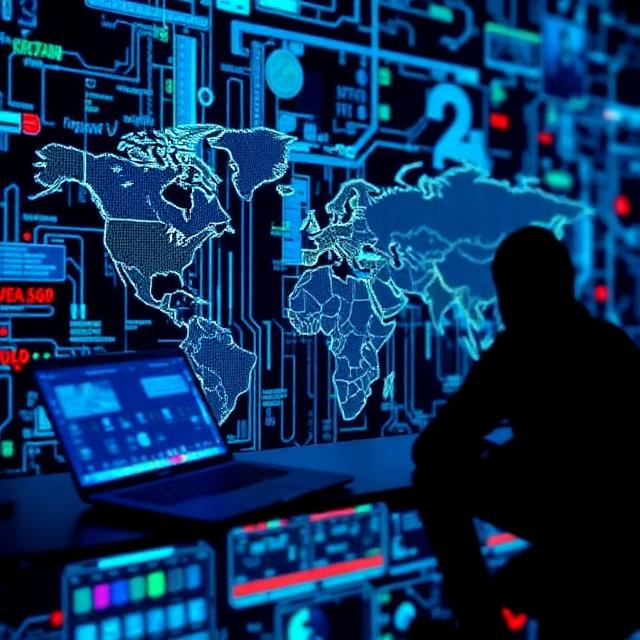
Cybersecurity has become one of the most important global security concerns in 2026 as governments, businesses, and technology companies face a sharp increase in cyberattacks, ransomware incidents, and digital espionage operations. Experts warn that cyber threats are becoming more sophisticated, more organized, and increasingly connected to geopolitical tensions.
Major corporations, financial institutions, hospitals, transportation networks, and government systems are all being targeted by cybercriminal groups seeking financial gain, sensitive data, or strategic disruption. Security analysts say attackers are now using advanced artificial intelligence tools to automate attacks, bypass defenses, and identify vulnerabilities faster than before.
Ransomware remains one of the biggest threats in the digital world. Criminal groups continue targeting organizations by encrypting critical systems and demanding large payments to restore access. Hospitals, schools, manufacturing companies, and infrastructure providers have all faced major operational disruptions from ransomware attacks in recent months.
Governments are also becoming increasingly concerned about state-sponsored cyber operations. Digital espionage campaigns targeting military systems, research institutions, telecommunications networks, and energy infrastructure have raised fears about cyber warfare becoming a major part of future geopolitical conflicts.
Artificial intelligence is creating both opportunities and risks in cybersecurity. While AI systems can help detect suspicious activity and improve defense systems, cybercriminals are also using AI to generate phishing scams, create fake identities, automate malware development, and conduct highly targeted attacks.
Cloud computing and remote work technologies have expanded the digital attack surface for businesses worldwide. Many organizations are now investing heavily in cybersecurity infrastructure, employee training, encryption systems, and zero-trust security frameworks to reduce risks.
Critical infrastructure protection has become a top global priority. Experts warn that attacks targeting power grids, transportation systems, water networks, communication systems, and healthcare infrastructure could create severe economic and public safety consequences.
International cooperation on cybersecurity is also increasing as governments attempt to establish rules, intelligence-sharing agreements, and joint defense strategies against cyber threats. However, differences in national policies and growing geopolitical competition continue to complicate global coordination.
Technology experts say cybersecurity is no longer only an IT issue — it has become a core national security, economic, and public safety challenge. Companies are now treating cybersecurity investments as essential rather than optional because the financial and reputational damage from attacks can be enormous.
As digital systems become increasingly connected to everyday life, analysts believe cybersecurity will remain one of the defining global issues of the modern era. The race between cyber defense and cybercrime is expected to intensify even further in the coming years.